




The practice of understanding customer satisfaction is older than you think.
Around 1750BC, a merchant named Nanni wrote a letter to a copper trader called Eanasir. He was furious. The wrong grade of copper ore had been delivered after a long gulf voyage. There were delays. There was misdirection. He wanted a refund and an explanation.
The letter was etched on a clay tablet. It sits in the British Museum today.
What strikes me every time I look at this is how little has changed. Wrong product. Delayed delivery. Unresponsive supplier. Nanni could have written that email yesterday.
The instinct to evaluate whether we got what we expected — and to react when we didn’t — is as old as commerce itself. What has changed, dramatically and especially in the last few decades, is how we define “what we expected.” That evolution is what this article is about.
Stage 1: The QCT World
For most of commercial history, satisfaction came down to three things. Emerson captured it well: build a better mousetrap, and the world will beat a path to your door.

Quality was the reference point. Deliver a good product, at a reasonable cost, in an agreeable time. Quality, Cost, Time — the QCT equation. Meet those three, and your customer was satisfied.
This wasn’t a simplistic view. In a world of limited choices and limited information, QCT was genuinely sufficient. If there were only two suppliers of copper ore in the gulf, Nanni’s options were limited. He could complain, but he couldn’t easily walk away. The power sat with the supplier. But that world began to shift. And the first thing that changed it wasn’t technology — it was the realisation that the experience around the product was itself a source of satisfaction.
Stage 2: The Convenience Revolution
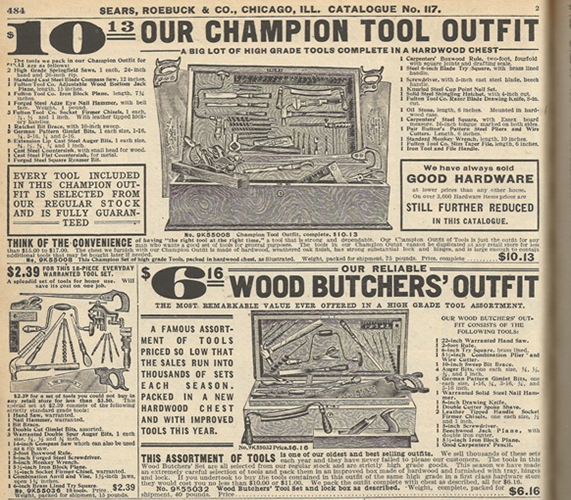
In 1908, Sears started distributing catalogues so customers could browse from home instead of visiting multiple stores. Pay in instalments. Free delivery. It sounds remarkably like Amazon. What Sears understood early was that eliminating effort — making it easier to buy, easier to receive, easier to pay — was a competitive advantage in its own right.
McDonald’s figured out the same thing with the drive-in. You didn’t have to park, walk in, wait, sit down. The product came to you. Convenience was the product.
This shift — from “what you get” to “how you get it” — was the first major expansion of what satisfaction means. Businesses that designed the experience around the customer, not around their own operational convenience, created a new benchmark. Everyone else had to follow or lose ground.
The digital era didn’t invent this idea. It just made it universal and raised the stakes considerably. Today, a B2B buyer who experiences a clunky onboarding process, a slow response on a service issue, or unnecessary complexity in a contract renewal will factor that into their satisfaction — regardless of how good the underlying product is. Ease of doing business has become a non-negotiable expectation, not a differentiator.
Stage 3: The Modern Complexity
The convenience revolution set a new floor. But three deeper shifts arrived — each building on the previous — and together they define the B2B satisfaction landscape today.
From products to services. As economies matured, what buyers purchased became increasingly intangible. Not just goods, but expertise, outcomes, continuity, relationships. And intangibles are fundamentally harder to evaluate on QCT terms alone. You can inspect a copper ore delivery. You cannot inspect the quality of a consulting engagement the same way.
When the product is intangible, satisfaction shifts from specification-based evaluation to perception-based evaluation. Subjectivity, context, and relationship enter the picture in ways that pure product businesses never had to navigate. This is why service businesses have always had a more complex relationship with customer satisfaction than product companies. The measurement challenge is built into the nature of what they sell.
From services to subscriptions. Once buyers experienced a service repeatedly and built confidence in its value, structured continuous access made more sense than repeated one-off decisions. This gave rise to subscription models, managed services, outcome-based contracts, and servitization.
The implications for satisfaction were profound. In a one-time purchase, dissatisfaction is a post-event feeling. In a subscription model, it’s an active recurring decision — re-evaluated at every renewal, every quarterly review, every escalation. Satisfaction has to be earned continuously. And this is where human relationships become non-negotiable. The account manager, the delivery lead, the client partner are not support functions — they are the experience.
Values and identity alignment. This is the newest shift, and perhaps the most underappreciated in B2B. Buyers today are increasingly choosing partners whose values align with their own. Not just what a company delivers, but who it is.
In my conversations with CIOs and senior leaders over the years, this surfaces more than most vendors realise:
- Some call out a partner’s commitment to society — a foundation, a community programme, a giving-back posture the client quietly notices and respects
- Some speak about how a partner behaved during a difficult period — standing by them through business downturns, cutting prices without being asked, coming back stronger when things turned around. That behaviour is remembered for years
- And sometimes it’s deeply personal — a CIO speaking about a vendor leader they admire not just for competence, but for their philosophy and the values they bring to every conversation
When that alignment exists, it creates loyalty that a competitor cannot disrupt with a better SLA or a sharper price.
From basic requirements to earned alignment
So, over time, the focus has broadened:
- From meeting basic requirements
- To designing experiences around the customer
- To earning alignment — with expectations, with commercial realities, and increasingly with values
Satisfaction today sits at the intersection of all of these. What was promised. What was delivered. What the relationship feels like. What the competition is offering. And whether this partner genuinely shares what matters to us.
That’s a long way from copper ore and clay tablets. But the underlying question — did I get what I expected, and was it worth it — hasn’t changed at all. In the end, satisfaction is always relative. Always fluid. Always a little tricky. And that’s exactly what makes it worth understanding properly.